If you're evaluating a video surveillance system for your business in Canada, you've probably come across the term "ONVIF compliant" in almost every camera spec sheet.
It's not marketing fluff, it's quickly becoming the single most important checkbox on any serious procurement list. Companies that ignore it often end up locked into a single vendor, paying more for less flexibility, and exposed to security gaps they didn't know existed.
This guide breaks down what ONVIF compliance actually means, how it affects Canadian businesses in practical terms, why it's turning into an industry-wide requirement rather than a nice-to-have, and which trends are reshaping the ONVIF landscape heading into 2026.
Key takeaways
- ONVIF is a manufacturer-neutral standard, not a brand or a single feature, it's a certification tested against official conformance profiles.
- Non-compliant systems create vendor lock-in, higher long-term costs, and audit/insurance friction.
- ONVIF compliance is moving from "recommended" to "required" in Canadian procurement, largely driven by RFP standards, integrators, and insurers.
- Buyers should verify the specific profile(s) a camera supports (S, T, M, A, C, D, G) rather than trusting the label alone.
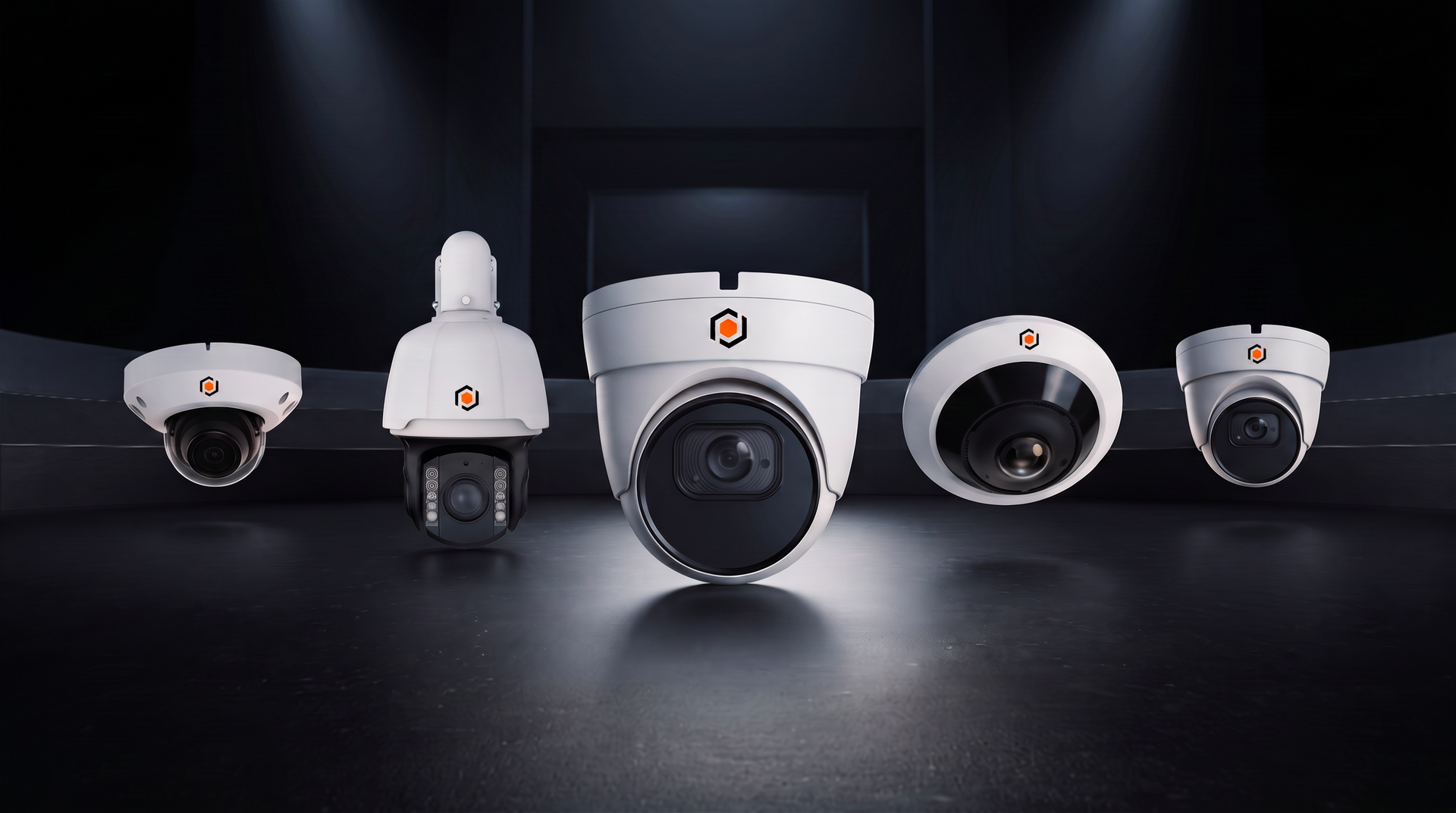
- G.S.D Group's catalog is designed against ONVIF Profile S, T, and M requirements, so Canadian buyers don't have to independently verify compliance claims.
What does "ONVIF Compliant" actually mean?
ONVIF (Open Network Video Interface Forum) is a global standards organization founded in 2008 by Axis Communications, Bosch Security Systems, and Sony. Its mission is simple but powerful: create a common communication language so that IP cameras, video management systems (VMS), recorders, and access control devices from different manufacturers can talk to each other without custom integration work.
Today, according to ONVIF.org, the organization has more than 500 member companies and over 35,000 conformant products on the market. A camera becomes "ONVIF compliant" once it's tested and certified against one or more official conformance profiles, which define exactly what functions the device supports:
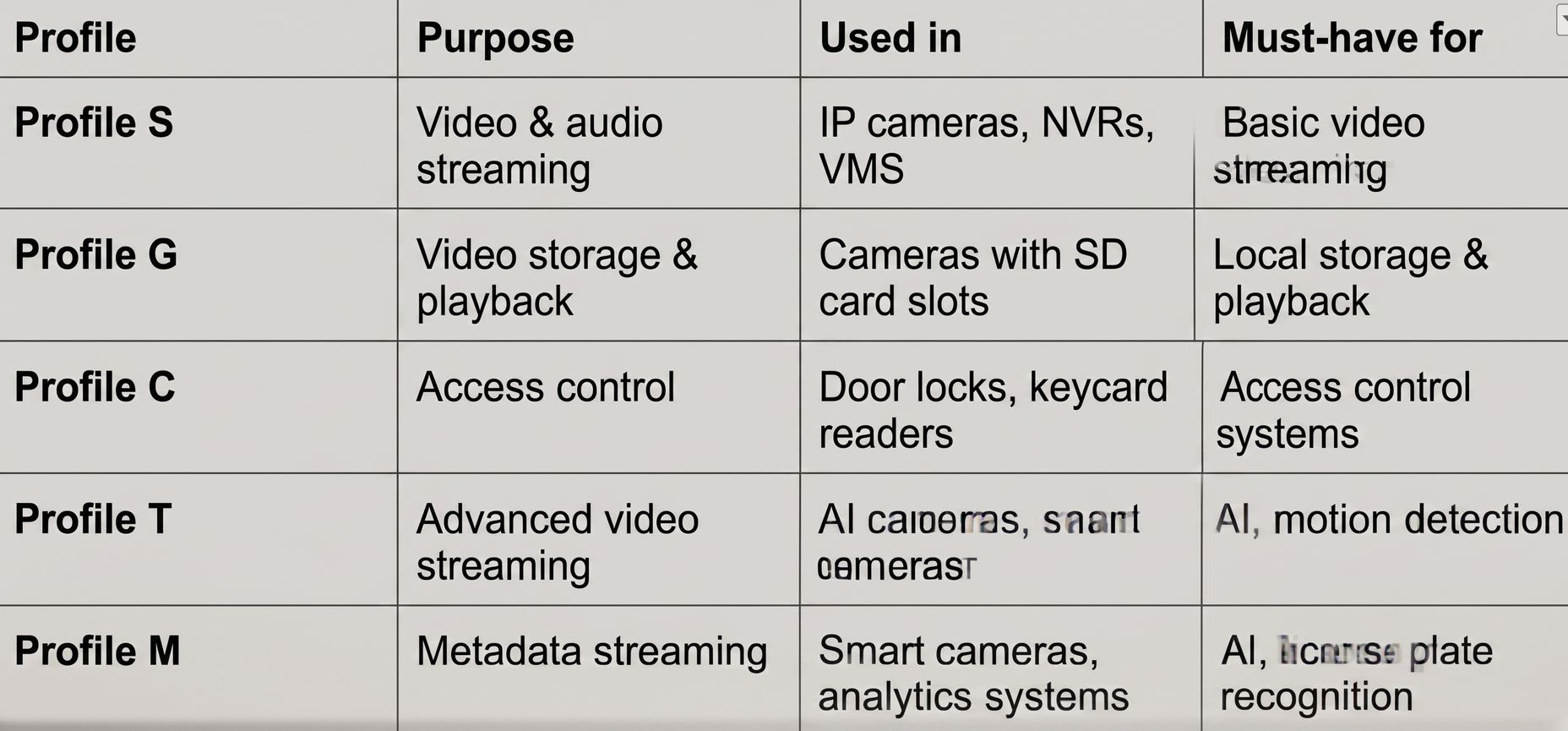
In other words, ONVIF compliance isn't a single feature. It's a certification that tells you, with third-party validation, exactly what a device can and cannot do, and that it will work with other ONVIF-certified equipment regardless of brand.
Why ONVIF compliance matters for any business
For a business owner or IT/security manager, the practical importance of ONVIF comes down to four things.
Interoperability without vendor lock-in. Without a shared standard, every camera brand speaks its own proprietary protocol. That means your business is stuck buying every future camera, recorder, and software license from the same manufacturer. ONVIF compliant cameras plug into almost any VMS or NVR on the market, so you keep negotiating power and the freedom to expand your system with the best equipment available, not just what one vendor sells.
Stronger, more predictable cybersecurity. ONVIF has increasingly built security requirements directly into its profiles, covering authenticated communication, encrypted streaming (TLS), and secure device onboarding. For businesses in regulated or risk-sensitive sectors, that's a meaningful advantage over unverified proprietary systems where security depends entirely on one vendor's internal practices.
Easier compliance and audits. When a system is documented against recognized ONVIF profiles, it's far easier for IT, insurance auditors, or compliance teams to verify what a device actually does, critical for businesses that need to demonstrate due diligence around data handling and privacy obligations under Canadian privacy law (PIPEDA) and provincial equivalents.
The real business Impact: What happens when you ignore it
Companies that install non-ONVIF or partially compliant systems tend to run into the same problems a few years down the line:
They discover their existing cameras can't integrate with the analytics or access-control platform they want to add, forcing a costly rip-and-replace. They lose leverage with their installer or vendor, since switching providers means replacing the entire camera fleet. They struggle to pass security audits or satisfy insurance requirements that increasingly ask for documented, standards-based equipment. And when a manufacturer discontinues a proprietary platform, they're left with hardware that has no clear upgrade path.
For growing Canadian businesses, retail chains adding locations, warehouses scaling operations, municipalities managing public infrastructure, this isn't a hypothetical risk. It's one of the most common reasons security budgets balloon unexpectedly.
Why ONVIF is becoming an industry must, not an option
Three forces are pushing ONVIF compliance from "recommended" to "required" across the Canadian security industry:
Procurement standards. Enterprise, municipal, and government RFPs increasingly list ONVIF conformance as a mandatory line item precisely because it's vendor-neutral and independently verifiable. Integrators who can't supply certified equipment are being excluded from bids outright.
System integrators demand it. As buildings combine video, access control, alarms, and building automation into a single platform, integrators need a common protocol to avoid building, and maintaining, dozens of custom bridges between systems. ONVIF is the default answer.
Insurance and liability pressure. Insurers and corporate risk teams are paying closer attention to the security posture of connected devices on a network. Standardized, auditable equipment is simply easier to underwrite than a patchwork of undocumented proprietary hardware.
Put simply: ONVIF compliance is turning into table stakes the same way PDF became the default for documents, not because any single company mandated it, but because the alternative creates friction for everyone in the supply chain.

Trends shaping ONVIF compliant cameras in 2026
The ONVIF ecosystem itself keeps evolving alongside the broader security industry. A few trends are worth watching if you're planning a system now:
AI analytics move to the edge. Profile M was built specifically to standardize how cameras report metadata and analytics events, object detection, people counting, license plate recognition, so that AI processing increasingly happens on the camera itself rather than a centralized server. This reduces bandwidth and speeds up real-time alerts.
Cybersecurity hardening is now a selling point, not an afterthought. Expect more buyers to ask specifically about encrypted streaming, secure boot, and certificate-based device authentication, all areas ONVIF profiles continue to formalize.
Unified platforms across video, access, and IoT. With Profiles A, C, and D maturing, the line between "camera system" and "building security platform" is disappearing. Businesses are consolidating video, door access, and sensor data into single dashboards, and ONVIF is the connective tissue making that possible.
Higher-efficiency video compression. Profile T's support for H.265 and smarter streaming is becoming the norm as camera resolutions climb and storage/bandwidth costs come under scrutiny.
Greater scrutiny on data privacy. As Canadian businesses face growing expectations around data handling, documented, standards-based video systems make it considerably easier to demonstrate responsible practices to regulators, clients, and insurers.
How to choose the right ONVIF compliant cameras
When evaluating equipment, don't just look for the words "ONVIF compliant" on a spec sheet, verify the specifics:
Check which conformance profile(s) the device actually holds (S, T, M, G, A, C, D), since that determines what it can genuinely do. Confirm the product against ONVIF's own conformant product database rather than relying on marketing claims. Make sure your chosen VMS or NVR explicitly supports the same profiles. Prioritize manufacturers with a track record of firmware updates and security patches. And if AI-based detection is part of your roadmap, confirm Profile M support up front rather than assuming it.
In Canada, this verification step is one reason more buyers work with manufacturer who pre-validate compliance rather than checking each SKU themselves. G.S.D Group, for instance, tests its camera lineup against ONVIF Profile S, T, and M requirements before listing a product, so the compliance check is already done by the time a business sees the spec sheet.
The bottom line
ONVIF compliance has moved well past being a technical detail for IT specialists. It's now a strategic decision that determines how flexible, secure, and future-proof your business's security infrastructure will be. Companies that standardize on ONVIF compliant cameras protect their investment, simplify integration with future technology, and stay ahead of the procurement and compliance expectations that are only getting stricter across Canada.
At G.S.D Group, our camera lineup is validated and certified under ONVIF standards, so you can build, or expand, your surveillance infrastructure with confidence that every device will work seamlessly with the systems you already have and the ones you'll add later. If interoperability, cybersecurity, and long-term flexibility matter for your next security investment, it's worth talking to a team that builds around open standards from day one.